Transponder Key vs. Key Fob vs. Smart Key: What's the Difference?
A transponder key is a car key with a chip in its head, and your car's immobilizer has to recognize that chip before the engine will run. A key fob is the remote that locks and unlocks the doors, often built into the key itself as a remote-head or flip key. A smart key, also called a proximity key, stays in your pocket: the car unlocks at the handle and starts with a button. Replacing any of them means programming the new key to your car, and most also need a blade cut.
Knowing which one you have tells you what a replacement involves, why a spare matters, and what to bring.
By The Locksmith Shop, South Tampa ·
Quick check: which key do you have?
- All metal, no plastic head: likely no chip. Usually just cut.
- Plastic head, no buttons: probably a transponder (chip) key. Cut and program.
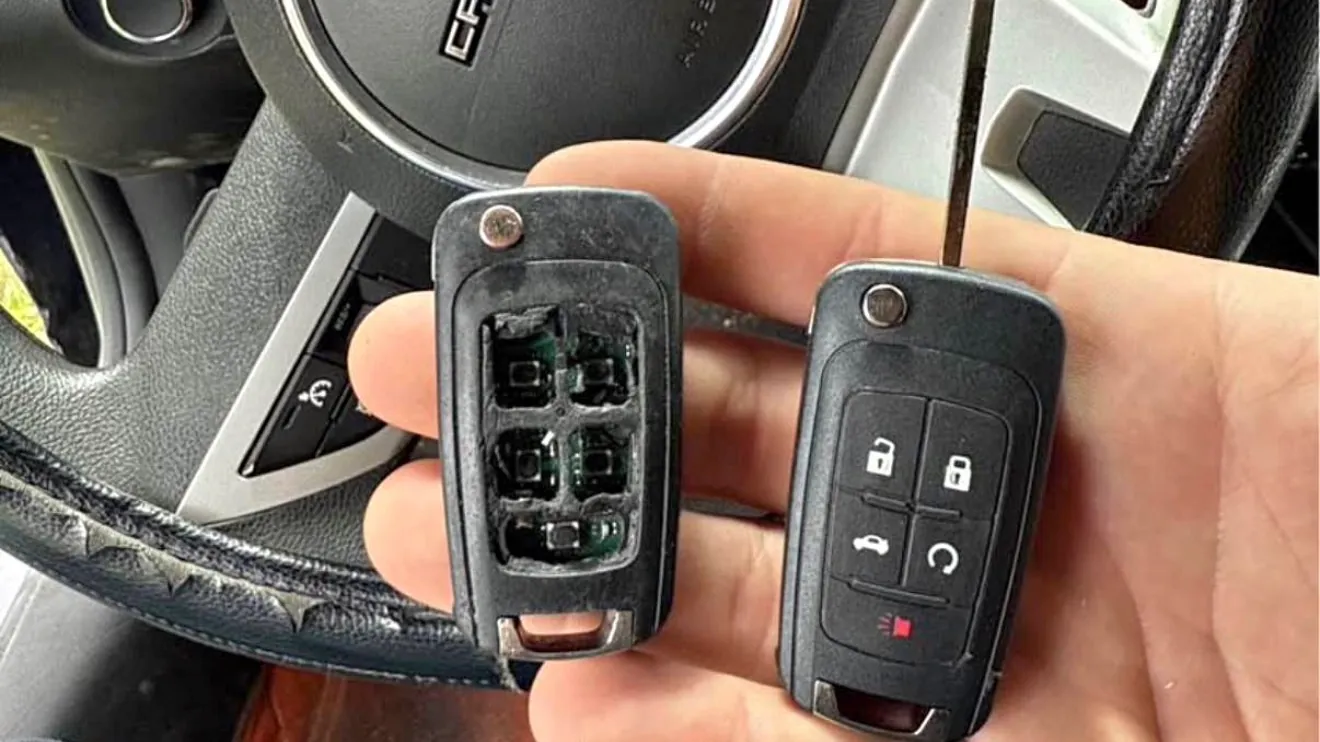
- Buttons on the head: a remote-head key. Cut, then program the chip and the remote.
- Blade folds into the fob: a flip key. Same as a remote-head key.
- Thick blade with a wavy groove down the face: laser-cut. Needs a high-security key machine.
- Nothing to turn, push-button start: a smart key. Programmed to the car, with the emergency blade inside cut to your door.
How can you tell which type of car key you have?
Transponder (chip) key
Remote-head key
Flip key
Laser-cut (high-security) key
Smart key (proximity key)
What does each type of key need when it's replaced?
Every modern car key replacement is some mix of two jobs: cutting a blade to fit your locks, and programming electronics to your car.
- All-metal key: cut only. If the original is badly worn, a key cut from the code fits better than a copy of the wear.
- Transponder key: cut the blade, then program the chip to the car's immobilizer. More on transponder key programming.
- Remote-head or flip key: cut the blade, program the chip, and program the remote. More on key fob replacement.
- Laser-cut key: cut on a high-security machine, by copying a good key, from the key code, or by VIN, then program any chip or remote. More on laser-cut car keys.
- Smart key: program it to the car as both the key it trusts at the start button and the remote for the doors, then cut the emergency blade.
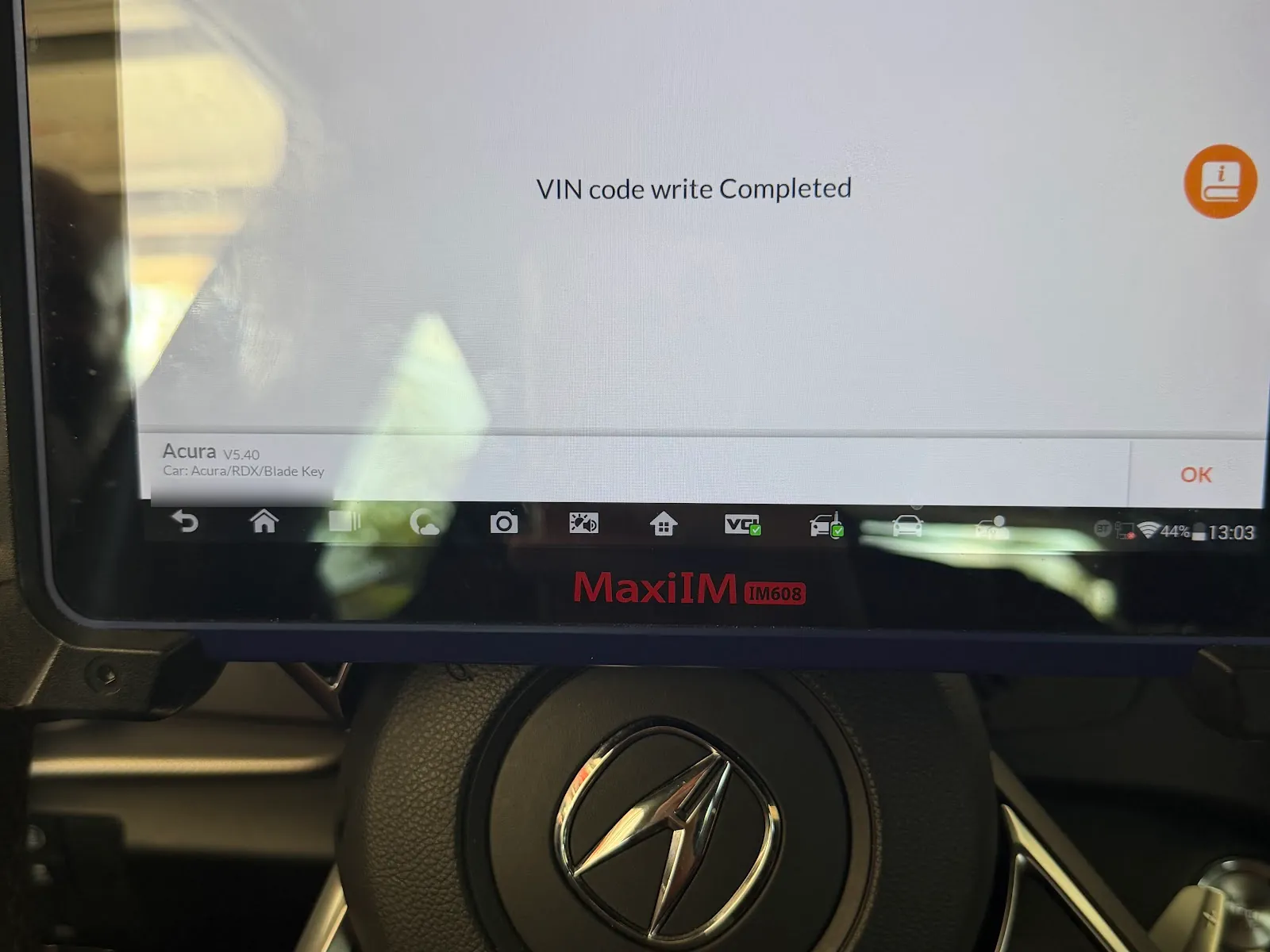
Programming happens with the car present, at our shop or wherever the car is parked, because the new key is registered to the vehicle itself. On some cars, programming a new key also erases any key that isn't there, so bring every key you want to keep using.
Why is a spare car key worth making before you need it?
Adding a key while you still have a working one is routine: bring the car and the key, and the new one is cut, programmed and tested. Losing the last key is more involved. The car can't be driven to the shop, so the work happens where it's parked; with nothing to copy, the blade is cut from the key code, which we look up by VIN once you show the car is yours; and on many vehicles, programming takes more steps when no working key is present. Already lost the last one? See lost car key replacement.
A spare also covers the day a fob goes through the wash or a flip key finally gives out. See spare car keys for how we make them, at the shop or at your car.
What should you bring to get a car key replaced?
- The vehicle. New keys are programmed to the car, so it needs to be at the shop, or we come to it.
- A photo ID plus the registration or title. We need proof the car is yours before we cut or program a key.
- Every key you have for the car, working or not, including the spare in the kitchen drawer.
- Your year, make and model, and the VIN. It's on your registration and insurance card, and on the dashboard at the base of the windshield on the driver's side.
Can a broken key fob be repaired instead of replaced?
Often. When the case cracks, the button pad wears through, the key-ring loop snaps or a flip key won't lock open, the board and chip inside are usually fine. We move them into a new shell, cut the blade if there is one and test every button; in most cases nothing needs reprogramming. If a fob went through the wash or into the pool or the bay and the board is damaged, it's a new programmed fob instead, so pull the battery right away if a fob gets wet. See key shell and flip key repair.
Which car makes can a locksmith program keys for?
As a locksmith in Tampa, we cut and program keys for most makes and models, including newer Jeep, Dodge, Ram and Chrysler vehicles with their added security layer, Chevrolet and other GM brands, and BMW. Each make page explains the keys that make uses: Honda, Toyota, Ford, Chevrolet and GMC, and Jeep, or browse car keys by make for the rest.
One exception we tell people up front: new keys for 2015-and-newer Mercedes-Benz models come only from the Mercedes dealer. We also make motorcycle and e-bike keys, and handle ignition repair and replacement when the problem is the ignition rather than the key.
Frequently Asked Questions
Is a smart key the same as a key fob?
A smart key is one kind of key fob. "Key fob" covers any remote that locks and unlocks the car, including remote-head and flip keys. A smart key goes further: the car senses it nearby, so you unlock at the handle and start with a button without taking it out of your pocket.
Will a key copied at a hardware store start my car?
Not if your car uses a transponder. A plain metal copy may unlock the doors and turn in the ignition, but the immobilizer won't let the engine run until a chip is programmed to the car.
Can you make a car key if I've lost every key?
In most cases, yes. With no working key, we come to the car, cut the new key from the key code we look up by VIN once you show the car is yours, and program it. It takes more steps than adding a key to one that works, which is why a spare is worth making early.
Do I have to go to the dealer for a smart key?
For most makes, no. We program replacement smart keys and proximity fobs at our South Tampa shop or wherever the car is parked. The exception is Mercedes-Benz 2015 and newer: new keys for those come only from the Mercedes dealer.
Need a Car Key Cut or Programmed?
Call (813) 832-4777 with your year, make, model and VIN for a free quote. Drive the car to our shop on S Manhattan Ave, or we'll come to wherever it's parked.
Walk-ins welcome at 4556 S Manhattan Ave, Tampa, FL 33611Monday–Saturday 8am–8pm · Closed Sunday · Insured & bonded