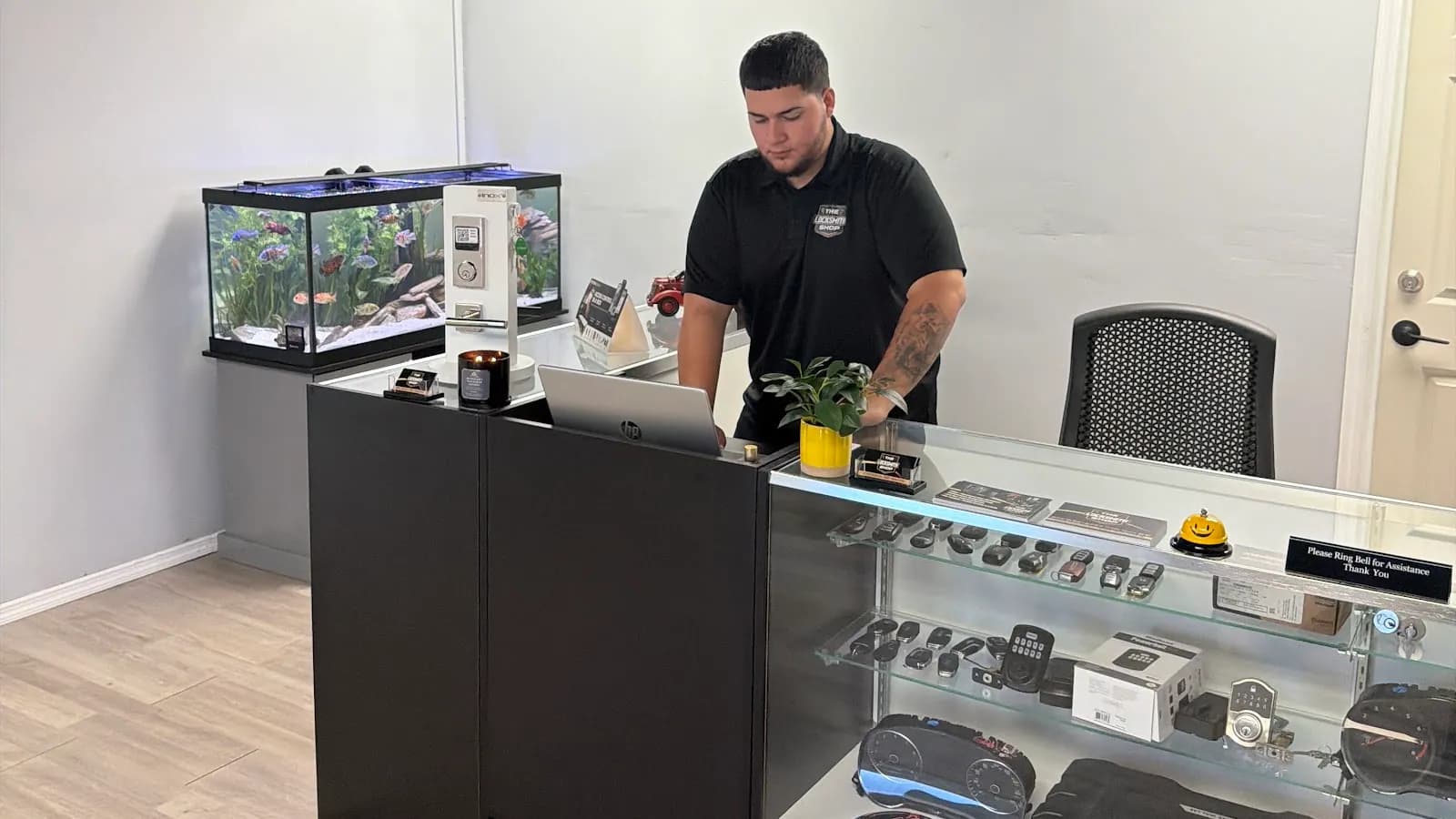
High-Security Locks in Tampa: Pick, Bump & Copy Resistance
A high-security lock does three jobs a typical deadbolt doesn't promise. It controls who can get a copy of the key, it resists quiet attacks like picking, and it resists force like drilling and pulling. The way to tell one apart is a tested rating that names its standard, not a word on the package.
Here's what the standards test, when a strong deadbolt and a rekey are enough, and how to choose between Mul-T-Lock, Medeco and Schlage Primus. We install authorized Mul-T-Lock, Medeco and Schlage hardware, bought direct, and we're an INOX lock dealer.
By The Locksmith Shop, South Tampa ·
The short version
- Key control: new keys cut only by an authorized dealer, for people you approve. A “Do Not Duplicate” stamp doesn't do that.
- Resistance to quiet attacks: picking and decoding.
- Resistance to force: drilling, pulling and twisting the cylinder.
- Proof: a rating under ANSI/BHMA A156.30 or UL 437, not just a “bump proof” label.
- Not sure you need it? If the problem is old keys, a rekey fixes it. If it's copies you didn't approve, you need restricted keys.
What makes a lock high-security?
The American National Standard for high-security cylinders is ANSI/BHMA A156.30. Its 2025 edition covers mechanical cylinders, electromechanical cylinders and electronic lock subassemblies, and it tests them in three categories (BHMA):
Key control
Destructive tests
Surreptitious tests
Each category gets its own level, A, B or C, with C the highest, and a full rating names the cylinder's grade plus its level in each of the three categories. The other standard you'll see is UL 437, the Standard for Key Locks, which covers door locks and locking cylinders among other key locks; its latest revision is dated January 31, 2023 (UL Standards). When a lock is sold as high-security, ask which standard it was tested to, and at what level.
Key control: why “Do Not Duplicate” doesn't stop copies
A “Do Not Duplicate” stamp asks whoever runs the key machine not to copy the key. It can't make them, and most hardware stores can copy a standard key.
The key blank is the control point: restricted and patented blanks aren't sold to copy shops, so every new key goes through an authorized dealer and the owner's sign-off. Mul-T-Lock's MTL800 platform, for example, uses a key-cutting control card: Mul-T-Lock says its certified key-cutting procedure works only when the original magnetic card is presented to an authorized Mul-T-Lock dealer who has a KC5 key-cutting machine (Mul-T-Lock).
The payoff is a key count you can trust: new keys don't get cut without your sign-off. That matters most when keys go to people outside the household, like housekeepers, contractors, tenants or staff.
“Bump proof” and “pick resistant”: how to read the label
Lock packaging often says “bump proof,” “pick resistant” or “drill resistant.” Those words describe the manufacturer's design, and the design may be a good one, but on their own they don't say which test a lock passed or at what level. A rating does: it names the standard, such as ANSI/BHMA A156.30 or UL 437, and the level reached. If the packaging names neither, ask the seller what the lock was tested to.
Want to see what's inside a standard lock? Our 3D walkthrough shows how a pin-tumbler lock works.
Is a Grade 1 deadbolt enough for a Tampa home?
Often, if your worry is forced entry rather than copied keys. BHMA grades hardware 1, 2 or 3 against the performance benchmarks in each standard, with grade 1 the highest (BHMA). For homes, BHMA also publishes a residential deadbolt standard, A156.40, with seventeen tests, including one that loads the door against the deadbolt with 1,350 pounds of force, and it checks corrosion resistance with a salt-spray test to ASTM B117 (BHMA).
That salt-spray test matters here. Homes closer to the bay get more salt air than inland streets, and their exterior deadbolts can stiffen sooner. The Grade 1 commercial-rated deadbolts we install on homes are meaningfully harder to kick or drill than builder-grade hardware, and the strike the bolt locks into needs to be just as solid. For the rest of the door, see our deadbolt basics.
Rekeying is a separate fix. It stops old keys from working, but it doesn't make the lock any stronger (see rekey or replace your locks). So when the worry is force and old keys, a strong deadbolt plus a rekey is often enough. High-security cylinders earn their place when the worry is who has keys, and who could get more.
Which upgrade fits the problem?
Match the hardware to what you're actually worried about:
| If you're worried about | What helps | What to look for |
|---|---|---|
| Old keys from past owners, tenants or staff | A rekey | Every old key stops working, and your hardware stays on the door. |
| Copies you didn't approve | Restricted or patented keys | New keys cut only by an authorized dealer, for people you approve. |
| Kicking and forced entry | A sturdier deadbolt and strike | BHMA grade 1, the highest grade. |
| Picking, drilling and pulling | A high-security cylinder | A rating under ANSI/BHMA A156.30 (levels A to C) or UL 437. |
| Salt air and corrosion | Hardware with a tested finish | Finish testing, such as the A156.40 salt-spray test to ASTM B117. |
| Handing out and taking back access | A keypad or smart lock | A code per person, plus a backup cylinder keyed to your house key where the lock allows. |
Mul-T-Lock, Medeco or Schlage Primus?
All three are high-security lines, and we install all three on South Tampa homes, including in Palma Ceia and along Bayshore. We don't rank them; the right one depends on your door and how you want keys handled. Compare them on:
- The key-control program. Who can order more keys, and what they have to show. Mul-T-Lock's MTL800 uses the control card described above, and Medeco describes its products as high-security door locks with patent-protected keys (Medeco). Ask how the system you're considering handles new keys, and who holds the authorization.
- The door and the lock on it now. Some locks can take a new high-security cylinder; others are better replaced. A photo of the door edge and the lock tells us which.
- The other doors. Not every door needs high-security keys. A home might put only the front entry on them, and a business or rental can save them for the doors that matter most.
- Finish. Match the hardware you have, and favor finishes that stand up to salt air if you're near the bay.
Where high-security cylinders earn their keep
- The front entry, the door most people have a key to.
- Homes where keys go to other people: housekeepers, nannies, contractors, pool and lawn crews, or renters. With restricted keys, the ones you hand out can't be copied at a hardware store or kiosk.
- Offices and rentals with turnover, where keys change hands often. See restricted keys for a whole building or rental.
- Businesses with access control: card and fob readers handle the doors people use all day, and keyed cylinders stay on as overrides. See access control for offices.
- Larger properties with guest houses, detached garages and service entrances, like the estate homes in Avila.
Want keyless entry as well? Many keypad and smart locks keep a key cylinder as a backup; see our guide to smart locks with a keyed backup and our keypad and smart lock installs.
Talk it through at the counter before you choose
The Locksmith Shop's counter at 4556 S Manhattan Ave, Tampa, FL 33611 takes walk-ins Monday through Saturday, 8am to 8pm, and is closed Sunday. Bring a photo of the door edge and the lock, tell us who has keys today, and we'll lay out the options, from a rekey to a high-security cylinder, before you buy anything.
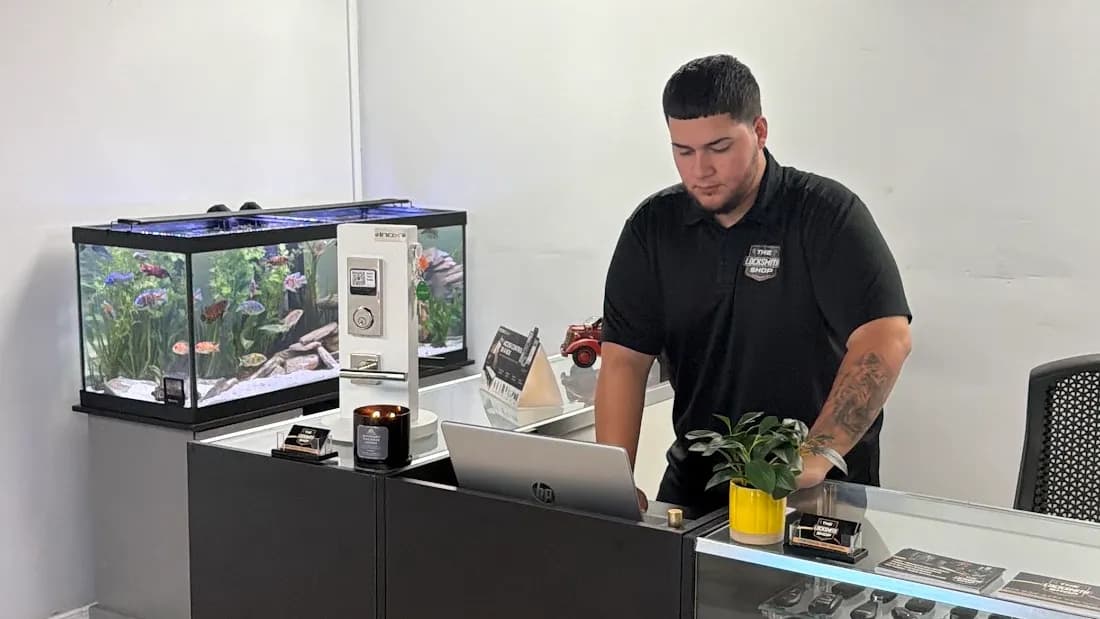
Quotes are free, and you'll have the price before any work begins. We're bonded and insured, every technician is background-checked, and we work in English or Spanish. Nearby? See our South Tampa shop, or our page for Palma Ceia homes.
Frequently Asked Questions
Can a “Do Not Duplicate” key be copied?
The stamp alone won't stop it. It's a request to whoever runs the key machine, not a control, and standard keys can be copied at most hardware stores. To control copies, use restricted or patented keys: copy shops don't stock the blanks, and an authorized dealer cuts new keys only for the people you approve.
Are high-security locks bump-proof?
Look past the label. “Bump proof” describes a manufacturer's design, not a test result. High-security cylinders are rated under ANSI/BHMA A156.30, which tests pick resistance, drilling and pulling, among other things, at levels A to C, or under UL 437. Ask which standard and level a cylinder meets.
Can you rekey a high-security lock?
Yes, on the Mul-T-Lock, Medeco and Schlage lines we're authorized for. On a documented restricted system, we rekey the locks a lost or departed key opened and update the keying chart, and new keys are cut only for people the owner approves. A door moving from standard keys to restricted keys may need a new cylinder instead.
Will a high-security cylinder fit my existing deadbolt?
It depends on the lock. Some can take a new high-security cylinder; others are better replaced with a new deadbolt. Bring a photo of the door edge and the lock to the shop on S Manhattan Ave, and we'll tell you which before any work begins.
Do I need high-security locks or just a better deadbolt?
Start with the problem. For forced entry, a sturdier deadbolt and strike do the most. For old keys, rekey. For copies you didn't approve, restricted keys from an authorized dealer. Not every door needs high-security hardware, and we'll tell you which ones do.
How much do high-security locks cost?
It depends on the brand, the number of doors, whether your current hardware can take a new cylinder, and how many keys you need, so we don't post prices. Quotes are free, and you'll have the price before any work begins. Call (813) 832-4777.
Thinking About High-Security Locks?
Tell us which doors matter most and who holds keys today. For a free quote, call (813) 832-4777, or bring a photo of the door and its lock to our counter on S Manhattan Ave.
Walk-ins welcome at 4556 S Manhattan Ave, Tampa, FL 33611Monday–Saturday 8am–8pm · Closed Sunday · Insured & bonded