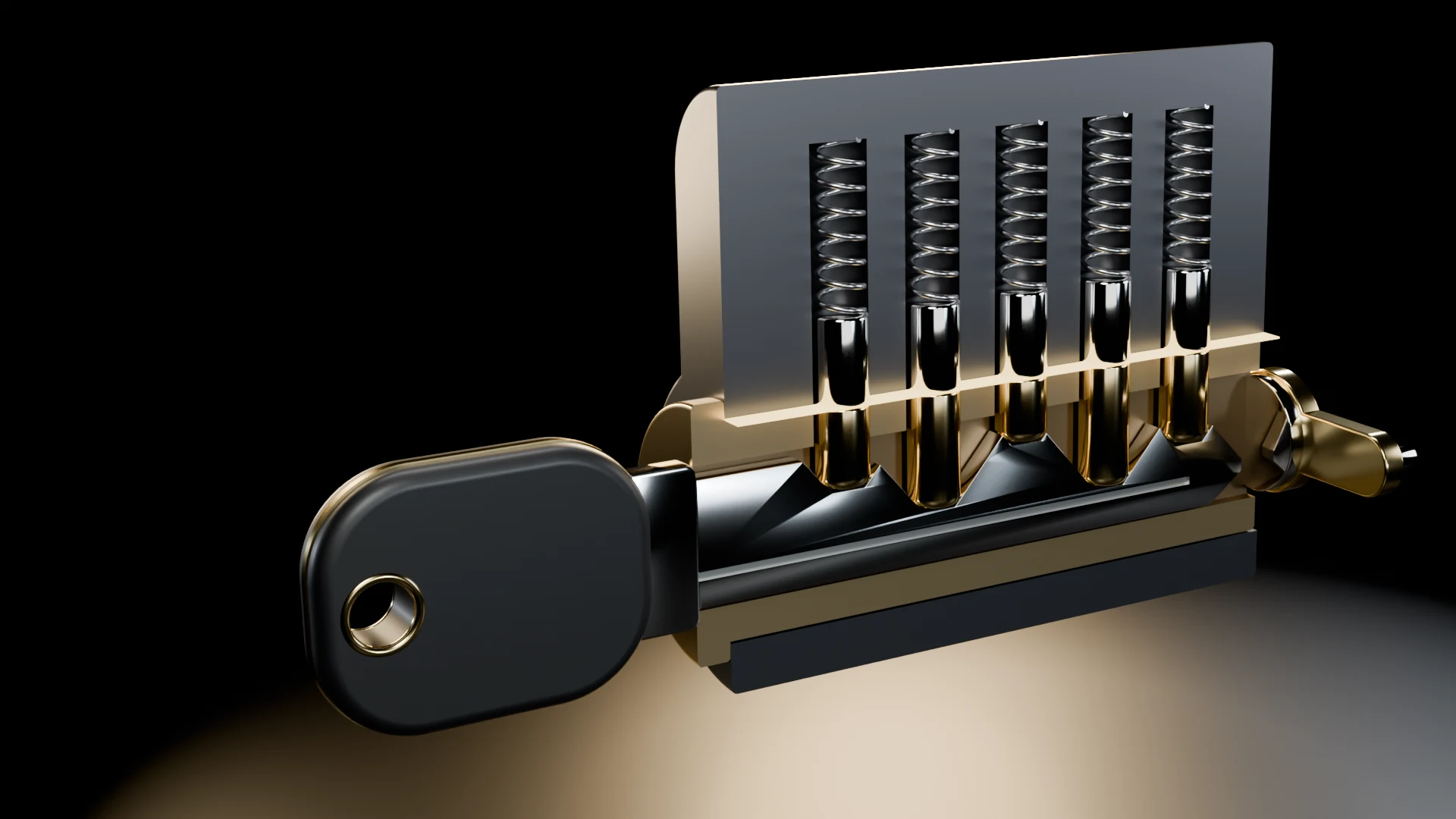
How We Unlock Doors
A look inside the lock on your front door.
Use the arrow keys, click, or swipe to move through the slides.
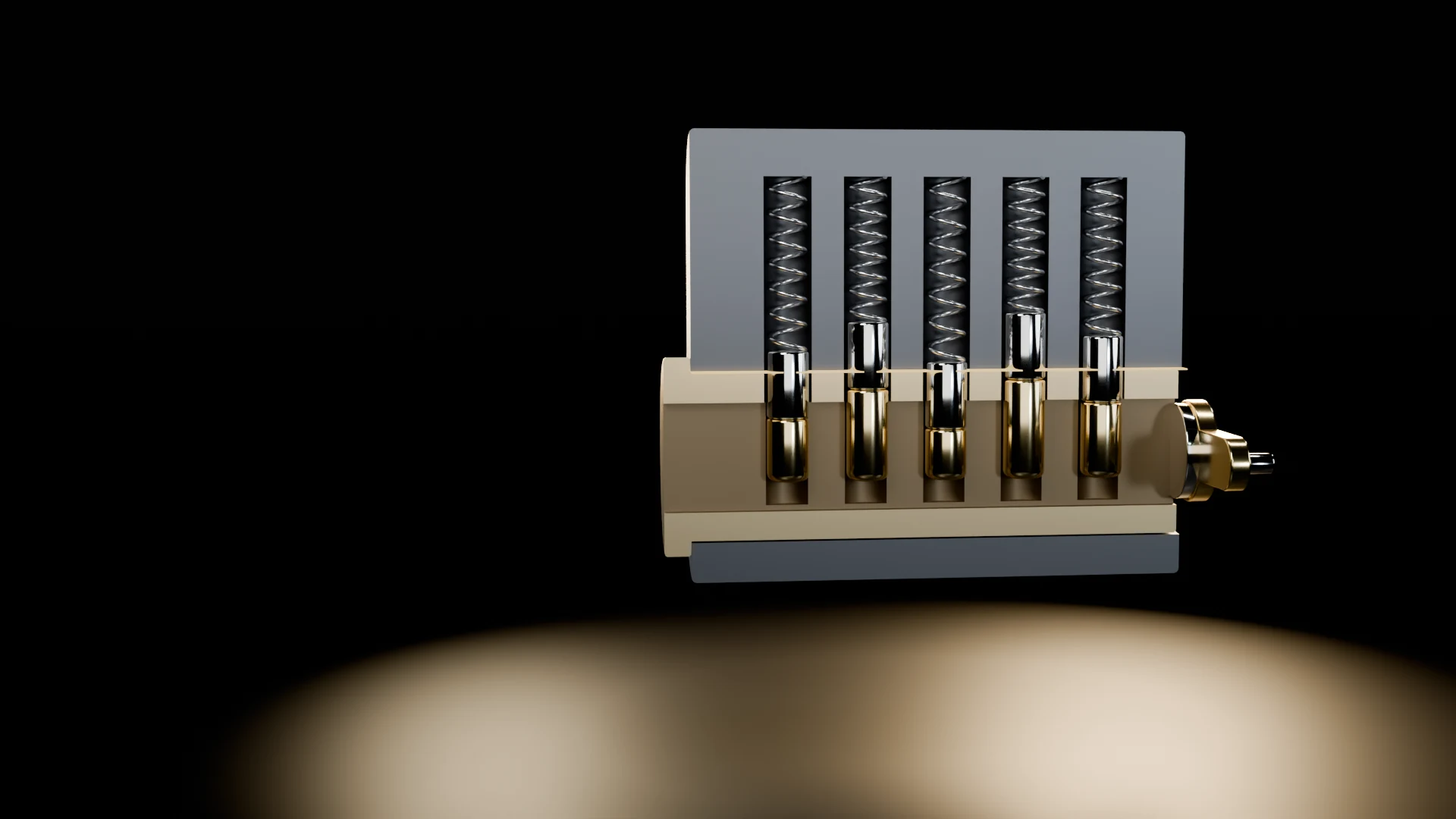
Inside a pin-tumbler lock
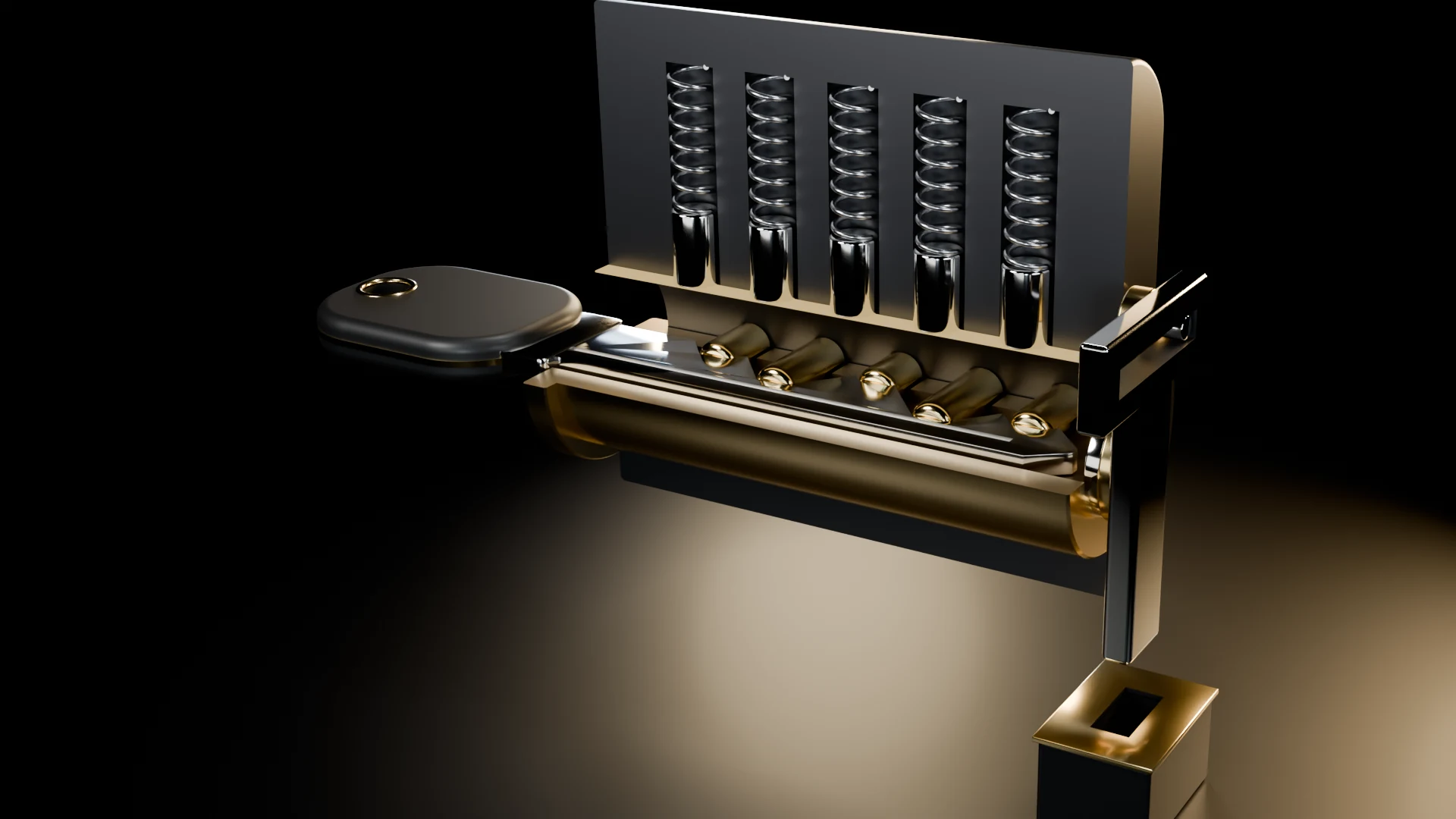
This is the design inside many everyday door locks. A brass plug sits in the housing, and stacks of small pins cross the gap between the two. Springs keep every stack pressed down.
That gap is the shear line. While any pin crosses it, the plug can’t turn.
- Housing
- Springs
- Driver pins
- Shear line
- Key pins
- Plug
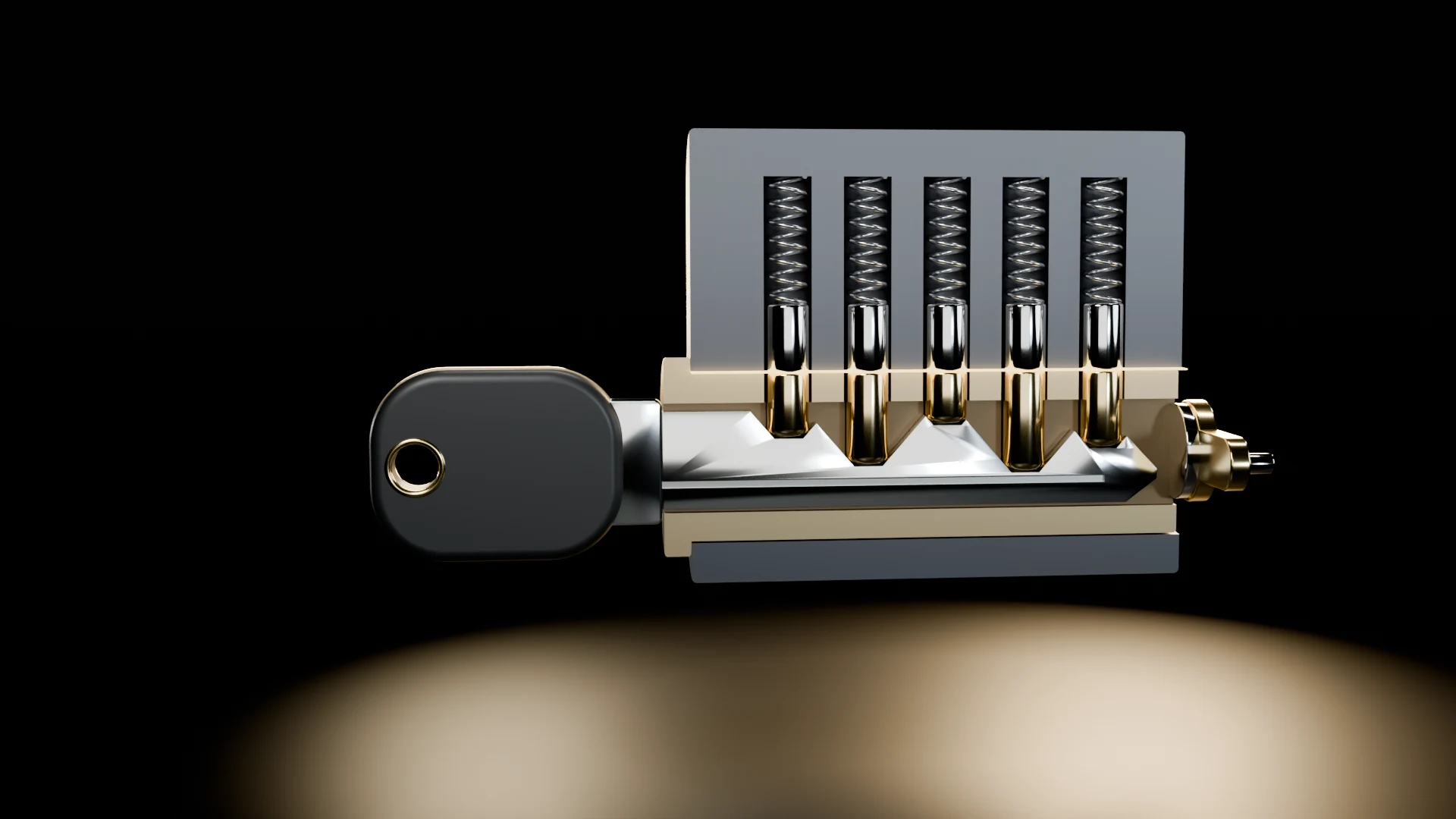
The right key lines every pin up at the shear line
Slide in the matching key and each stack rises by just the right amount, so every gap lands on the line. With nothing crossing it, the plug is free to turn.
- Shear line
- Each cut is a set depth
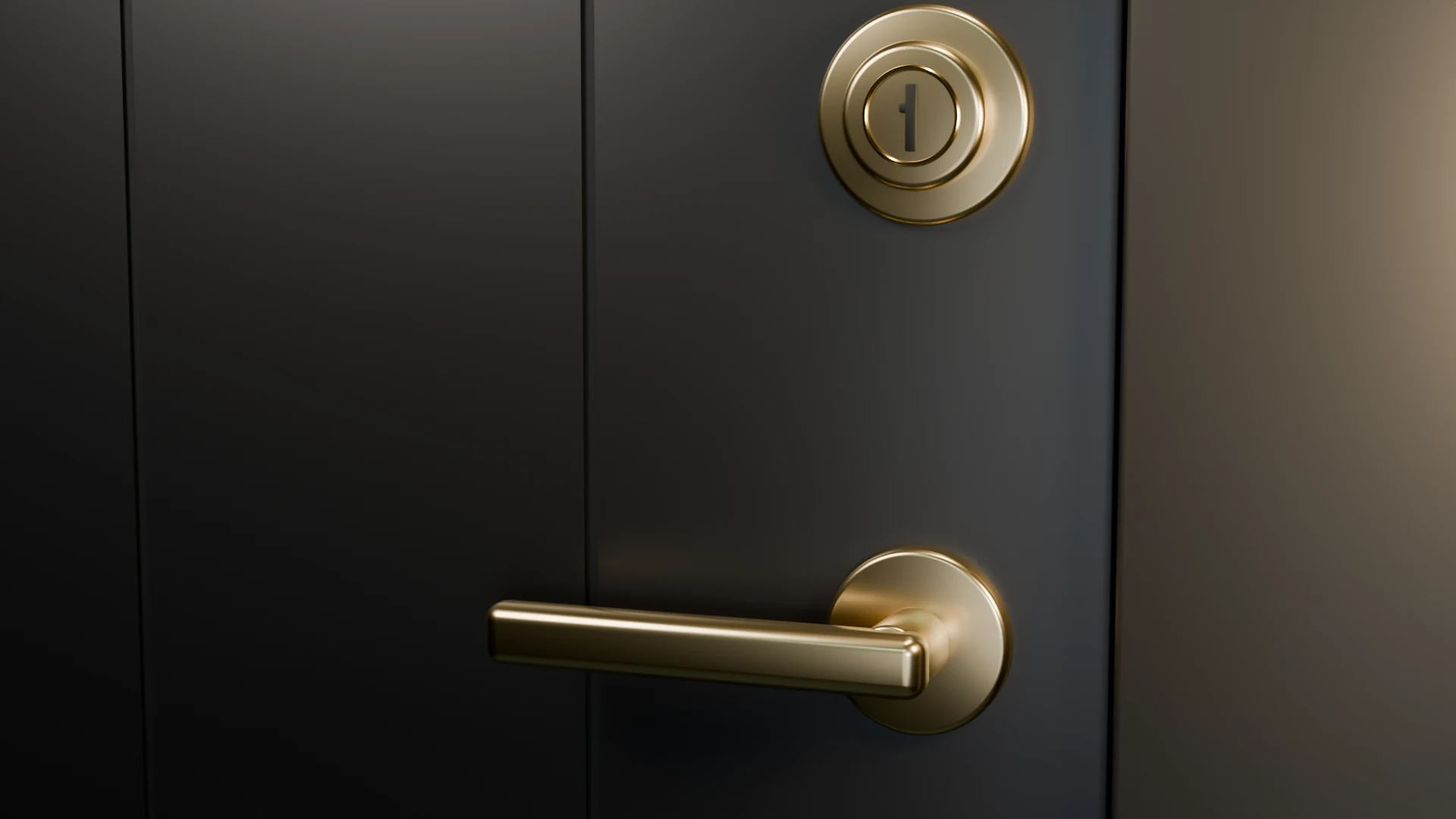
Non-destructive entry: we open the lock, not break the door
Knowing how the pins work lets us work with the lock instead of forcing it. The aim is simple: your door, frame and finish stay the way they were.
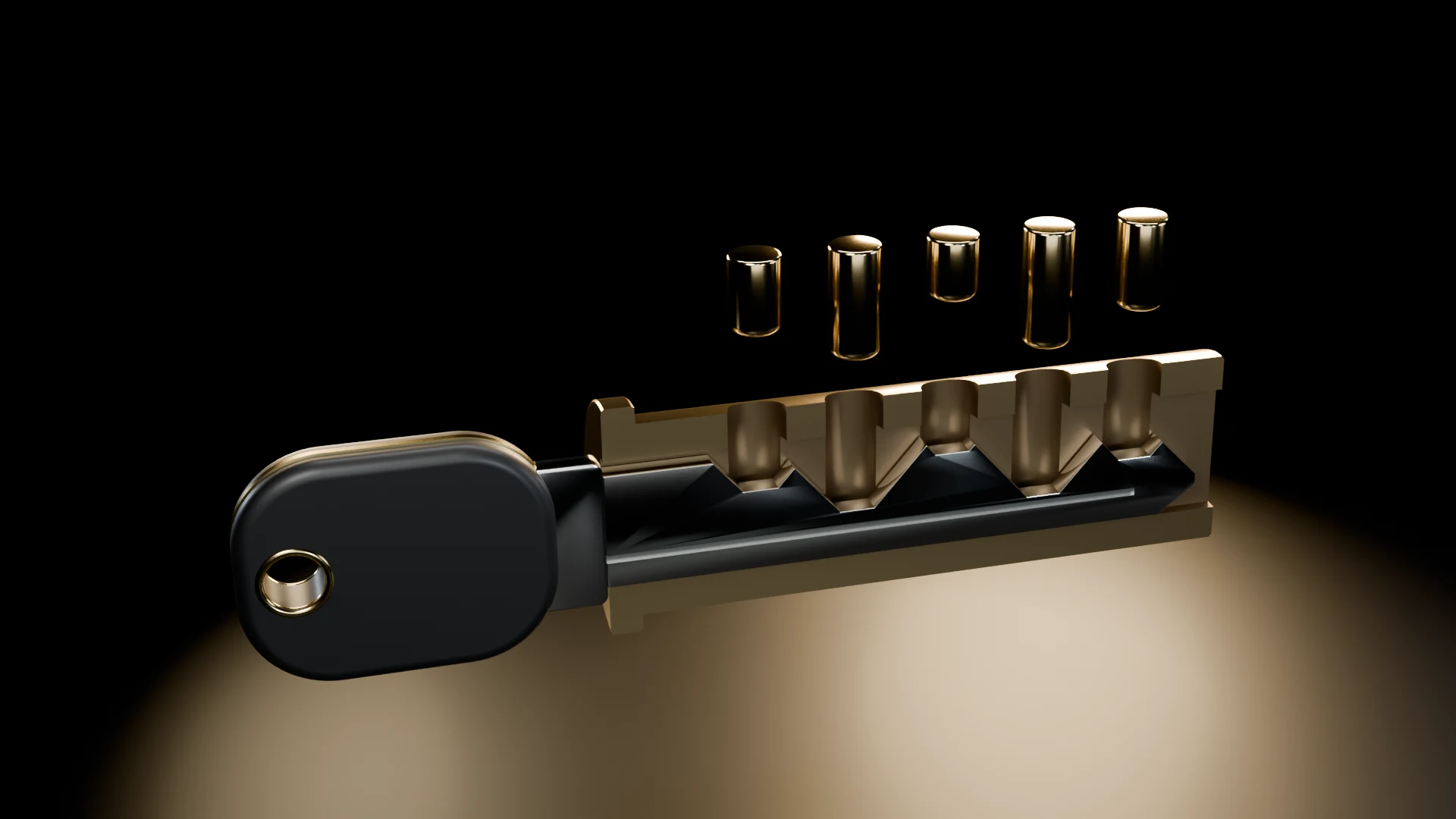
Then we can rekey or make new keys on the spot
Rekeying swaps the key pins for a new set of lengths. Old keys stop working, and the lock stays on your door.
Need spares? We cut new keys to match.
- Key pins
Precision, not force
That’s how we unlock doors: understand the lock, open it cleanly, and leave you with keys that work.
Locked out, need a rekey, or need new keys? The Locksmith Shop, 4556 S Manhattan Ave, Tampa.
Call (813) 832-4777