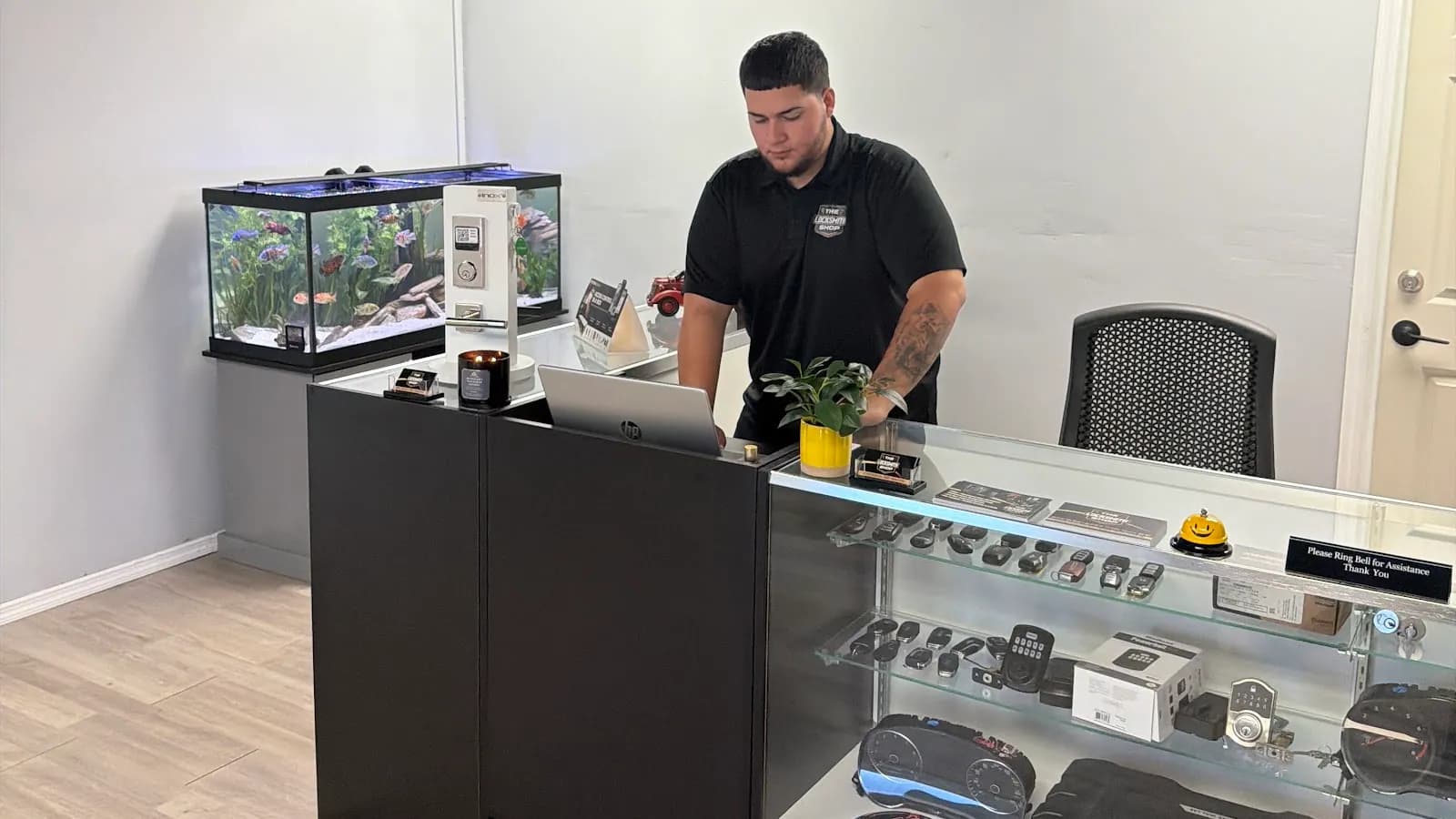
Rekey or Replace Your Locks? How to Decide
Rekey your locks when the hardware is in good shape and the problem is the keys: you just moved in, a key went missing, or a roommate or tenant moved out. Replace them when the lock itself is worn, damaged or corroded, or when you want an upgrade like a stronger deadbolt or a keypad. Rekeying keeps your existing locks and changes the pins inside, so old keys stop working, and it's usually the more affordable of the two.
Here's how to tell which one your doors need, with a few notes on what Tampa's humidity and salt air do to lock hardware.
By The Locksmith Shop, South Tampa ·
Quick answer: rekey or replace?
Rekey when…
- You moved in and don't know who still has keys
- A key was lost or stolen
- A roommate, ex, tenant or contractor no longer needs access
- The locks work smoothly and you like them
Replace when…
- The key sticks even with the door open, or the lock is loose or damaged
- Corrosion has the bolt or latch dragging
- You want a stronger deadbolt, restricted keys or keyless entry
- Mixed brands keep you from putting every door on one key
What does rekeying a lock actually do?
Most door locks on Tampa homes are pin tumbler locks. Inside the cylinder sit small pins of different lengths, and a key works only when its cuts lift every pin to exactly the right height. Rekeying replaces those pins with a new set that matches a new key. The lock body, the deadbolt and the handles all stay on the door, and every old key stops working, including copies you never knew existed.
Because only the pins change, a rekey is also how several locks end up on one key. If your front door, back door and garage entry door share the same keyway (usually, the same brand), they can be rekeyed to match, so one key opens all of them. Our residential locksmith services cover rekeys, lock changes and deadbolt upgrades.
Should you rekey after moving into a new home?
Yes. When you buy a house, you can't know how many keys are still out there: previous owners, their relatives, dog walkers, cleaners, contractors and agents may all have had one. Rekeying every exterior lock is the simplest way to start clean, including the doors people forget, like the door from the garage into the house and a side door that rarely gets used.
If your new place came with a keypad, as many newer townhomes south of Gandy Boulevard do, reset its codes along with the keys. Renting? Check with your landlord first, since the locks are usually theirs and many leases spell out how lock changes are handled.
For a full move-in list, see our closing-day rekey checklist.
Should you rekey or replace after losing your keys?
Rekey. When keys are lost or stolen, the risk isn't the lock; it's the key in someone else's pocket, and rekeying takes that key out of play without buying new hardware. Treat it as urgent if the keys were with anything that points to your home, like a wallet with your ID, mail with your address, or a car with the registration in the glove box.
If a car key was on the same ring, replacing it is a separate job. Our guide to transponder keys, key fobs and smart keys explains what a new car key involves. If it was your only car key, see lost car key replacement.
Do you need to rekey when a roommate or tenant moves out?
Any time someone who had a key shouldn't anymore, rekeying is the clean fix. Getting the key back doesn't tell you whether copies were made. That covers a roommate moving out, a relationship ending, a contractor finishing a long job, or a house sitter or short-term rental guest who held a key.
For landlords, rekeying between tenants protects you as much as the next tenant. With several units, a master key system keeps it manageable: each unit has its own key, while the owner or maintenance lead carries one master. As a Tampa locksmith, we set units up under a landlord or property-manager master, rekey between tenants and keep the keying chart current. If keys keep walking away, Mul-T-Lock restricted keys, whose blanks copy shops don't carry, add another layer of control.
For apartment key logs, see our Miya's Law key log guide and free template.
When do locks need replacing instead of rekeying?
Rekeying fixes a key problem. It doesn't fix a hardware problem. Replace the lock when:
- The cylinder is worn: the key is hard to insert or turn even while the door is standing open.
- The lock is loose on the door, cracked, or was damaged in a break-in attempt.
- Corrosion has set in and the bolt or latch drags. Salt air and humidity are hard on lock finishes and internals, especially in homes close to the bay in South Tampa, Davis Islands and Ballast Point.
- You want a real upgrade: a sturdier deadbolt, a high-security cylinder with restricted keys, or a keypad or smart lock.
- Your doors use different brands and you want one key for everything, in which case one lock may need a new cylinder.
One quick test before you decide: open the door and work the key and the deadbolt. If both move smoothly with the door open but bind when it's closed, the lock is probably fine, and the door or the strike plate needs adjusting. Summer humidity swells doors, and that's one of the most common reasons a healthy deadbolt starts to feel broken. Hurricane season is also a good time to check that every exterior deadbolt throws fully into the frame, and to replace any lock that's already rusting.
Is a keypad or smart lock a better upgrade than new keys?
If you're replacing anyway, ask whether you want keys at all. A keypad deadbolt gives each person their own code, and deleting one leaves everyone else's alone, which suits families, cleaners, contractors and rentals. Keypad-only models run on batteries and need no Wi-Fi; smart locks add phone control, temporary codes and a log of who came and went.
Many keypad and smart locks still have a key cylinder for backup, and where the lock allows, it can be keyed to match your other locks. See keyless entry and access control for the options we install, or our smart locks guide for a closer comparison.
What affects the cost of rekeying vs. replacing locks?
We don't post prices, because every house is different, but the factors are simple: how many locks or cylinders need work, the brand and grade of the hardware, whether it's a rekey or a full replacement, and any smart-lock setup. Rekeying is usually the more affordable option, since you keep the hardware you already paid for. Quotes are free by phone or through our contact form, and you'll have the price before any work begins.
Frequently Asked Questions
Is it cheaper to rekey or replace locks?
Rekeying is usually the more affordable option, because the lock stays on the door and only the pins inside change. Replacing adds the cost of new hardware. Every house is different, so call (813) 832-4777 for a free quote; you'll have the price before any work begins.
Is rekeying as secure as replacing the lock?
Against old keys, yes: once a lock is rekeyed, no previous key will open it. Rekeying doesn't make the lock itself any stronger, though. If you want more resistance to picking, drilling or forced entry, that's a hardware upgrade, such as a sturdier deadbolt or a high-security cylinder.
Can all my locks be rekeyed to the same key?
Usually, as long as the locks share the same keyway, which mostly means the same brand. If one door uses a different brand, its cylinder may need replacing so everything runs on one key. We'll tell you which doors can match before any work begins.
Should landlords rekey between tenants?
It's the most reliable way to know a former tenant's key no longer works, which is why many landlords and property managers rekey at every turnover. With several units, a master key system lets each unit get a new key while the owner or manager keeps one master key.
Not Sure Whether to Rekey or Replace?
Tell us how many doors you have and what's on them now. Call (813) 832-4777 for a free quote, or bring a photo of your door and lock to our shop on S Manhattan Ave and we'll talk it through.
Walk-ins welcome at 4556 S Manhattan Ave, Tampa, FL 33611Monday–Saturday 8am–8pm · Closed Sunday · Insured & bonded